
1. المقدمة
This manual provides essential information for the safe and effective use of your Trojan T-605 6 Volt 210 AH Deep Cycle Flooded Lead-Acid Battery. The Trojan T-605 is designed for applications requiring reliable, long-lasting power, such as golf carts, solar energy systems, marine vessels, and recreational vehicles. Please read this manual thoroughly before installation, operation, or maintenance to ensure proper handling and to maximize battery life and performance.

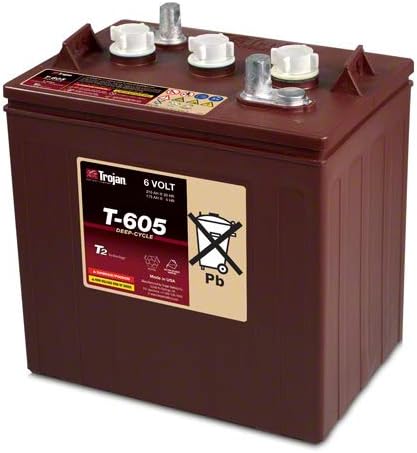
Figure 1: Trojan T-605 6 Volt Deep Cycle Battery. This image shows the maroon casing, terminal posts, and product label indicating 'Trojan T-605 Deep-Cycle' and '6 VOLT'.
2. معلومات السلامة
Lead-acid batteries contain sulfuric acid and produce explosive gases. Improper handling can result in severe injury or death. Always follow these safety precautions:
- معدات الحماية الشخصية (PPE): Always wear safety glasses, a face shield, and acid-resistant gloves when working with batteries.
- تهوية: Ensure adequate ventilation during charging and operation to disperse hydrogen gas. Do not charge or operate batteries in an enclosed area.
- No Sparks or Flames: Keep sparks, flames, and smoking materials away from batteries. Hydrogen gas is highly flammable.
- حمض التآكل: Battery electrolyte is corrosive sulfuric acid. Avoid contact with skin, eyes, or clothing. In case of contact, flush immediately with water and seek medical attention.
- صدمة كهربائية: Batteries can deliver a high current. Do not wear metallic jewelry when working with batteries. Use insulated tools.
- رفع: The T-605 battery weighs approximately 58 lbs (26 kg). Use proper lifting techniques or assistance to prevent injury.
- تحذير بشأن الاقتراح 65: يحتوي هذا المنتج على مواد كيميائية معروفة في ولاية كاليفورنيا بأنها تسبب السرطان والعيوب الخلقية أو غيرها من الأضرار التناسلية.
3. الإعداد والتثبيت
يُعد التركيب الصحيح أمراً بالغ الأهمية لأداء البطارية وسلامتها.
3.1 فك العبوة والتفتيش
- Carefully unpack the battery and inspect for any signs of damage during shipping. Do not install a damaged battery.
- Verify that the battery model and specifications match your requirements.
3.2 Battery Location and Ventilation
- Install batteries in a clean, dry, cool, and well-ventilated area.
- Avoid locations where batteries are exposed to direct sunlight or extreme temperatures.
- Ensure sufficient airflow around the batteries to dissipate heat and hydrogen gas.
3.3 اتصالات المحطة الطرفية
- Ensure all cable connections are clean, tight, and free of corrosion. Use a wire brush to clean terminals if necessary.
- Connect batteries in series or parallel according to your system's voltage and capacity requirements. Refer to your system manufacturer's guidelines for proper wiring configurations.
- Connect the positive (+) terminal of the battery to the positive (+) cable and the negative (-) terminal to the negative (-) cable.
- Tighten terminal bolts (5/16” bolt) to the manufacturer's recommended torque specifications. Over-tightening can damage terminals.
الشكل 2: الجزء العلوي view of Trojan T-605 battery showing embedded low profile terminals. This image highlights the terminal posts and caps, which are crucial for proper connection and maintenance.
3.4 الرسوم الأولية
- After installation, it is recommended to fully charge the battery before its first use.
- Use a charger specifically designed for flooded lead-acid batteries with appropriate voltage and current settings for a 6-volt battery.
4. تعليمات التشغيل
The Trojan T-605 is a deep cycle battery, designed for sustained discharge and recharge cycles.
- Discharge Limits: Avoid discharging the battery below 50% of its rated capacity to maximize cycle life. Deep discharges (below 20% state of charge) can significantly shorten battery life.
- الشحن: Always recharge the battery promptly after use. Leaving batteries in a discharged state can lead to sulfation and permanent capacity loss.
- توافق الشاحن: Use a charger compatible with 6-volt flooded lead-acid batteries. Refer to the charger manufacturer's instructions for proper operation.
5. الصيانة
Regular maintenance is essential for the longevity and performance of flooded lead-acid batteries.
5.1 الري
- Check electrolyte levels regularly, typically every 2-4 weeks, or more frequently in hot climates or during heavy use.
- Only add distilled water. Never add tap water, acid, or other chemicals.
- Add water after charging, unless the plates are exposed before charging. If plates are exposed, add just enough water to cover them, then charge, and top off to the correct level after charging.
- Do not overfill. The electrolyte level should be approximately 1/8 to 1/4 inch (3-6 mm) below the bottom of the fill well.
5.2 التنظيف
- Keep the battery top and terminals clean and dry. Dirt and moisture can create conductive paths, leading to self-discharge.
- Clean terminals and connectors with a solution of baking soda and water (1 cup baking soda to 1 gallon water). Rinse with clean water and dry thoroughly.
- Apply a thin coat of petroleum jelly or anti-corrosion spray to terminals to prevent corrosion.
5.3 رسوم المعادلة
- An equalization charge is an intentional overcharge performed on flooded lead-acid batteries to remove sulfate crystals that may accumulate on the plates over time.
- Perform an equalization charge when specific gravity readings vary significantly between cells (0.015 or more) or when batteries are consistently undercharged.
- Consult your charger's manual or a battery specialist for proper equalization procedures and frequency.
6. استكشاف الأخطاء وإصلاحها
If you experience issues with your battery, perform the following basic checks:
- حجم منخفضtage/Short Run Time:
- Check battery charger functionality and settings.
- Verify electrolyte levels and add distilled water if needed.
- Inspect all cable connections for tightness and corrosion.
- Ensure the battery is receiving a full charge cycle.
- Excessive Corrosion:
- Clean terminals as described in Section 5.2.
- تأكد من التهوية المناسبة أثناء الشحن.
- Avoid overfilling cells with water.
- البطارية لا تحمل الشحن:
- Perform an equalization charge if specific gravity readings are inconsistent.
- Check for parasitic loads in your system that may be draining the battery.
- إذا كانت البطارية قديمة، فقد تكون قد وصلت إلى نهاية عمرها الافتراضي.
For persistent issues, consult a qualified battery technician or contact customer support.
7. المواصفات
| ميزة | مواصفة |
|---|---|
| نموذج | T-605 LPT MV |
| المجلدtage | 6 فولت |
| سعة | 210 Amp ساعات (هـ) |
| نوع البطارية | Deep-Cycle Flooded/Wet Lead-Acid Battery |
| تركيب الخلية | حمض الرصاص |
| إمكانية إعادة الاستخدام | قابلة لإعادة الشحن |
| الأبعاد (الطول × العرض × الارتفاع) | 10.30 بوصة (262 ملم) × 7.11 بوصة (181 ملم) × 11.07 بوصة (281 ملم) |
| وزن | 58 رطل (26.3 كجم) |
| نوع المحطة الطرفية | مُضمّن Low Profile Terminal (5/16” bolt) |
8. التخزين
For optimal battery life, follow these guidelines for long-term storage:
- Fully charge the battery before placing it into storage.
- Store batteries in a cool, dry, well-ventilated area, protected from direct sunlight and freezing temperatures.
- Disconnect the battery from all loads to prevent parasitic discharge.
- Perform a refresh charge every 3-6 months to maintain a full state of charge.
9. التخلص
Lead-acid batteries are recyclable. Do not dispose of batteries in household waste. Return spent batteries to an authorized battery recycler or collection center. Improper disposal can harm the environment and human health. Note that these batteries cannot be shipped by standard carriers (USPS, UPS, Fed Ex, or Common Carrier) for disposal due to their nature.
10. الضمان والدعم
For warranty information, technical support, or service inquiries regarding your Trojan T-605 battery, please contact the retailer or the manufacturer, Trojan Battery Company, directly. Keep your proof of purchase for any warranty claims.