
1. مقدمة للدليل
This user manual serves as a comprehensive guide for students and professionals utilizing the textbook "Machines & Mechanisms: Applied Kinematic Analysis, Fourth Edition" by David Myszka. Its purpose is to enhance your learning experience by providing insights into the book's structure, effective study methods, and resources for deeper understanding. This edition offers an up-to-date introduction to kinematic analysis, emphasizing real-world applications and utilizing state-of-the-art techniques.
2. Getting Started: Preparing for Study
Proper preparation can significantly impact your ability to grasp the complex concepts presented in this textbook.
2.1 المتطلبات الأساسية
- A foundational understanding of engineering mechanics, including statics and dynamics.
- Proficiency in basic calculus and linear algebra.
- Familiarity with fundamental physics principles related to motion and forces.
2.2 المواد الموصى بها
- Notebook and writing instruments for taking notes and working through problems.
- Calculator with scientific and engineering functions.
- Access to a computer with engineering software (e.g., CAD, simulation tools) for practical application, as discussed in the text.
3. Effective Use of the Textbook
To maximize your learning, engage with the material actively and systematically.
3.1 Navigating Chapters
Each chapter is structured to build knowledge progressively. Begin by reviewing the chapter objectives and end-of-chapter summaries. Pay close attention to the introduction of new terminology and concepts, which are often highlighted.
3.2 Understanding Concepts
The book emphasizes the application of kinematic theories to real-world problems. Focus on understanding the underlying principles before attempting complex problem sets. Re-read sections that are unclear and refer to previous chapters if necessary.
3.3 حل المشكلات
The textbook includes numerous examples and end-of-chapter problems. Work through the examples step-by-step to understand the application of formulas and methodologies. Attempting the problems independently is crucial for reinforcing your understanding. Solutions to odd-numbered problems are typically provided at the back of the book for self-assessment.
3.4 Utilizing Illustrations and Diagrams
The book contains various illustrations, diagrams, and timing charts to aid in visualizing complex mechanical systems and their motion. Study these visuals carefully as they often provide critical insights into the concepts being discussed.
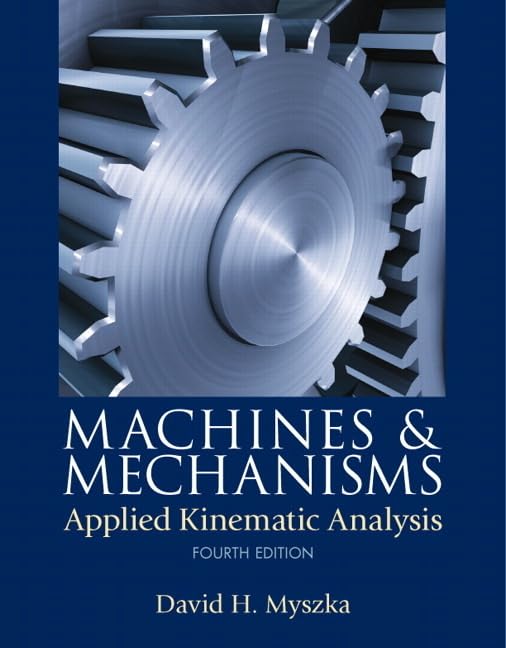
الشكل 3.1: The cover of the textbook, featuring a detailed illustration of interlocking gears, symbolizing the core subject matter of machines and mechanisms. This visual representation highlights the practical and mechanical focus of the book's content.
4. Maintaining Knowledge and Retention
Consistent review and application are key to long-term retention of the material.
4.1 إعادةview الاستراتيجيات
- Regularly revisit previously covered chapters and concepts.
- Work through additional problems or create your own to test understanding.
- Discuss concepts with peers or instructors to solidify your knowledge.
4.2 Physical Care of the Book
To ensure the longevity of your textbook, store it in a dry place away from direct sunlight and extreme temperatures. Avoid bending the spine excessively or marking pages with permanent ink if you intend to resell or preserve its condition.
5. Addressing Common Challenges
Encountering difficulties is a normal part of the learning process. Here are some common issues and suggested approaches.
5.1 Difficulty with Concepts
- Re-read: Go over the challenging section multiple times.
- Seek External Resources: Consult supplementary materials, online tutorials, or other textbooks.
- Instructor/Peer Help: Do not hesitate to ask your instructor or classmates for clarification.
5.2 Errors or Discrepancies
While every effort is made to ensure accuracy, minor errors can occasionally occur in textbooks. If you suspect an error in a problem or explanation, first re-verify your own work. If the discrepancy persists, consult your instructor or check the publisher's website for an official errata list for this edition.
6. مواصفات المنتج
Key details regarding the textbook:
| يصف | التفاصيل |
|---|---|
| الناشر | بيرسون |
| تاريخ النشر | 30 ديسمبر 2010 |
| طبعة | الطبعة التاسعة |
| لغة | إنجليزي |
| طباعة طول | 384 صفحة |
| رقم الكتاب الدولي المعياري 10 | 0132157802 |
| رقم الكتاب الدولي المعياري 13 | 978-0132157803 |
| وزن العنصر | 2 رطل |
| أبعاد | 8.7 × 0.85 × 11.2 بوصة |
7. الدعم والموارد
For additional assistance or resources related to the textbook:
7.1 Publisher Contact
For inquiries regarding the textbook content, errata, or supplementary materials, please visit the official Pearson Education website or contact their academic support department. Specific contact details can usually be found on the publisher's webالموقع أو ضمن مقدمة الكتاب.
7.2 الموارد عبر الإنترنت
Check the publisher's website for this specific textbook. Often, companion websites offer additional practice problems, interactive tools, or instructor resources that can aid in your study. بحث عن "Pearson Machines & Mechanisms Myszka" to find relevant online materials.
8. معلومات الضمان
For academic textbooks, a traditional product warranty (e.g., against manufacturing defects) is typically handled by the retailer or distributor at the point of purchase. Regarding the intellectual content, the publisher, Pearson, strives for accuracy and completeness. Any significant errors or omissions are usually addressed through official errata sheets published on their website. There is no explicit 'warranty' on the educational outcome; learning effectiveness depends on individual study and application.